6 min read
Flip your fish oil bottle: a Malaysian label decoder
By Mikael Chew · Omega-3 educator
Published 30 May 2026
On a fish oil label, ignore the big front "1000mg" (that is total oil) and the vaguer "omega-3 300mg" (which may include poorly-converted plant ALA) — the line that matters is EPA and DHA per capsule, added together. Watch the serving-size trap (dosage may be quoted per 2 capsules, not per one), and note what is usually missing entirely: the Totox freshness value, the TG-versus-EE form, and the source species. The only fair cross-brand comparison is total EPA+DHA per bottle divided by price.
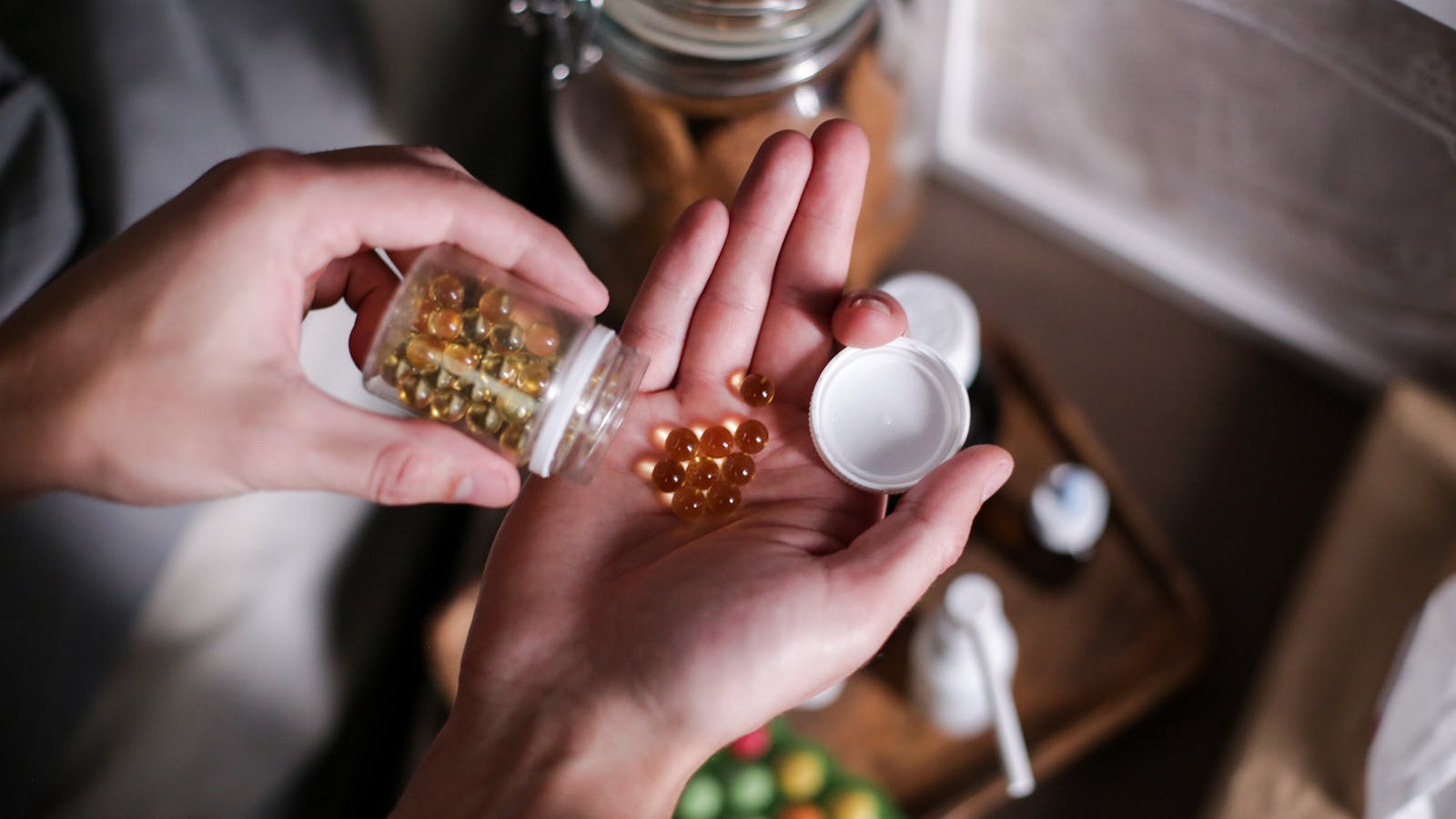
Take the fish oil bottle you have in your house right now. Flip it to the back. We're going to walk through what every line on the label actually means — including the lines that exist mainly to confuse you.
Line 1: "Fish oil 1000mg" (front label, usually)
This number is total fish oil per capsule. It is not what your body uses. Most of that 1000mg is neutral fat from the fish — bulk, not active ingredient.
Why brands lead with it: the bigger number sells better. "1000mg" looks more impressive than "300mg EPA + DHA." Both can be true on the same capsule.
Line 2: "Omega-3 300mg" (sometimes back label)
Getting warmer. Omega-3 is a family of fats. The two that matter for human function are EPA and DHA. A "300mg omega-3" claim may include ALA (a plant-derived omega-3) which your body converts to EPA/DHA inefficiently. So the 300mg number isn't quite what you think it is.
Line 3: "EPA 180mg, DHA 120mg per capsule" (this is what matters)
This is the line your body actually uses. Add the two together — in this example, 300mg combined EPA + DHA per capsule. That's the number to compare across brands.
Why this matters: the EFSA-approved benefit for heart function is observed at 250mg EPA + DHA daily. If your capsule has 150mg combined, you need two daily. If it has 500mg, one is enough.
Line 4: "Serving size: 2 capsules"
Trap. Some brands list the dosage information per serving (2 capsules), not per capsule. Read carefully. If the label says "EPA 500mg, DHA 300mg" but the serving is 2 capsules, that's 400mg combined per capsule — not 800.
What's NOT printed on most labels
Totox value
The freshness measure. Industry standard under 26. Premium under 10. Best under 5. If the bottle doesn't print it, you have to email the brand and request the Certificate of Analysis for your specific batch.
Form (TG or EE)
Triglyceride (TG) form is more bioavailable. Ethyl ester (EE) is cheaper and less absorbed. Many labels omit this entirely. Ask the brand.
Source species
Small fish (anchovy, sardine, mackerel) accumulate less heavy metal than large fish (tuna, swordfish). The bottle may say "fish oil" without specifying the source. Look for "anchovy," "sardine," or specific species named.
The buyer's calculation
Once you have the numbers:
- EPA + DHA per capsule
- × capsules per bottle
- = total mg of what matters
- ÷ price of bottle
- = mg per ringgit (or ringgit per gram, same calculation inverted)
This is the only fair comparison across brands. The label price hides it. Now you don't have to.
The two-question filter
Before buying any fish oil, ask the brand:
- What's the Totox value for the batch I'm buying?
- What's the EPA + DHA per serving, and what's the source species?
If they can't answer both quickly, you have your answer about whether to buy.
Most fish oil labels are designed to look like medicine while delivering candy. Once you can read them, the bottle becomes a source of information instead of a source of confusion. Which one is yours?
Sources
- Albert BB, et al. (2015). Fish oil supplements in New Zealand are highly oxidised and do not meet label content of n-3 PUFA. Scientific Reports.
- European Commission / EFSA (2012). EU Register of nutrition and health claims (EPA/DHA authorised claims). European Commission.
Educational summary of published research. Always consult a healthcare professional for personal advice.
Written by Mikael Chew, who has spent 23 years in health and wellness. Educational content — observations, not medical advice.
Keep reading
Curious where your own habits land?
Take the 2-minute assessment